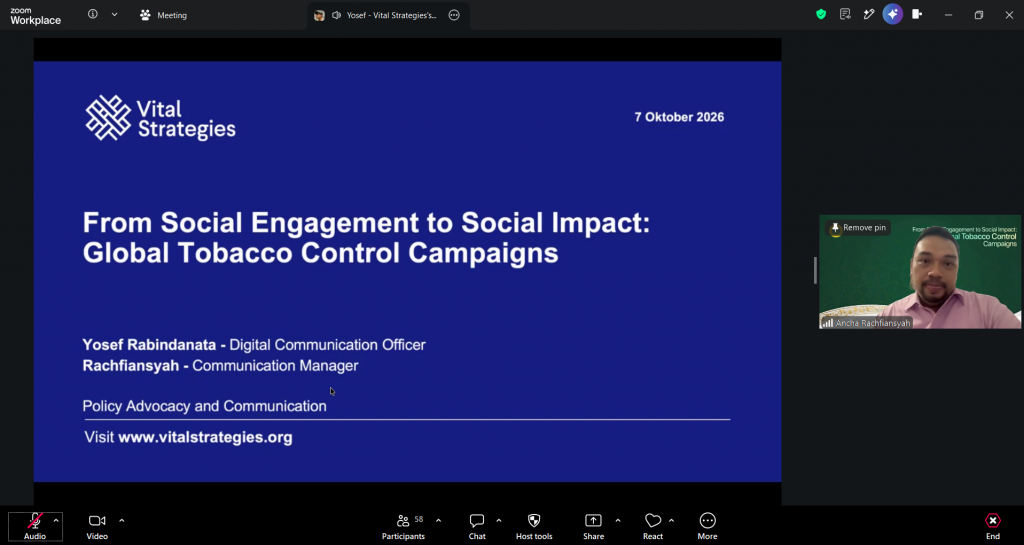
Jakarta, October 7, 2026 – The Undergraduate of Communication Science Program, Faculty of Social Sciences and Law (FISH), Universitas Negeri Jakarta (UNJ), welcomed global public health organization Vital Strategies for a guest lecture in the Globalization Issues course. Led by lecturers Nada Arina Romli, M.I.Kom. and Noprita Herari, M.I.Kom., the session carried the theme “From Social Engagement to Social Impact: Global Tobacco Control Campaigns” and featured Yosef Rabindanata, Digital Communication Officer, and Rachfiansyah (Ancha), Communication Manager at Vital Strategies.
Vital Strategies is a global public health organization that works alongside governments and civil society organizations to strengthen public health systems through data, policy solutions, strategic communication, and advocacy. In tobacco control, the organization has developed campaigns across various countries to raise public awareness, build community support, and encourage policies that promote public health.
During the session, students explored how the success of a communication campaign extends beyond social media engagement metrics. While likes, views, and shares indicate audience engagement, the broader impact of a campaign can be seen through changes in public knowledge, perceptions, and attitudes, as well as the development of social action, behavioral change, and policy support. This perspective highlights the importance of strategic communication that is designed to create meaningful and sustainable social impact.
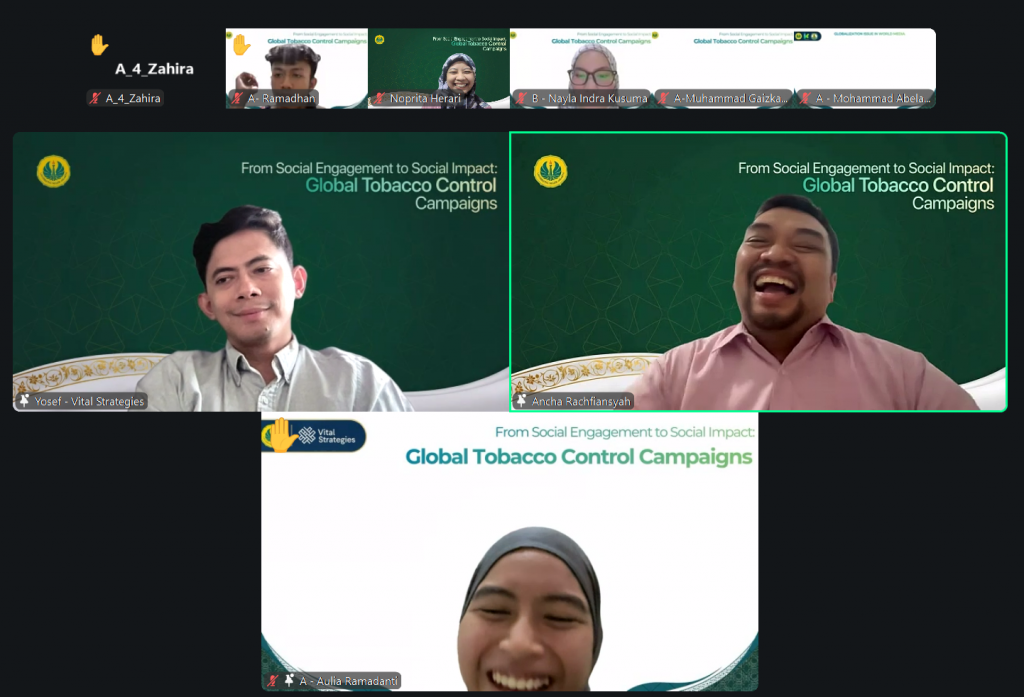
The discussion also addressed the challenges of digital campaigning amid social media algorithms that personalize content distribution based on users’ interests and online behavior. Students learned about the importance of audience research, message development, content distribution, response measurement, and continuous evaluation in shaping campaign strategies. Understanding different audience characteristics is equally essential to ensure that messages reach their intended groups effectively, including audiences who have not yet been exposed to a campaign.
The speakers further introduced students to various digital marketing tactics employed by the tobacco industry, including advergaming, influencer promotion, entertainment and content marketing, community and event promotion, surrogate marketing, and brand extension. Students were also introduced to Canary, a digital tobacco marketing monitoring initiative that demonstrates how data can be transformed into evidence to support public communication, media coverage, advocacy, and policymaking.
Another key point highlighted during the lecture was the importance of avoiding victim-blaming toward smokers. Public health communication needs to address the broader structures and industry marketing practices that shape consumption patterns rather than placing the responsibility solely on individuals. When policy changes at the national level encounter obstacles, advocacy efforts can also be strengthened through collaboration among local communities, civil society organizations, media, and other stakeholders.
Through this guest lecture, students of the Undergraduate Communication Science Program gained insights into the application of strategic communication in addressing global public health issues. The exchange with Vital Strategies provided an opportunity to connect communication concepts with real-world campaign practices while highlighting the role of creativity, evidence-based approaches, and audience engagement in creating meaningful social change.