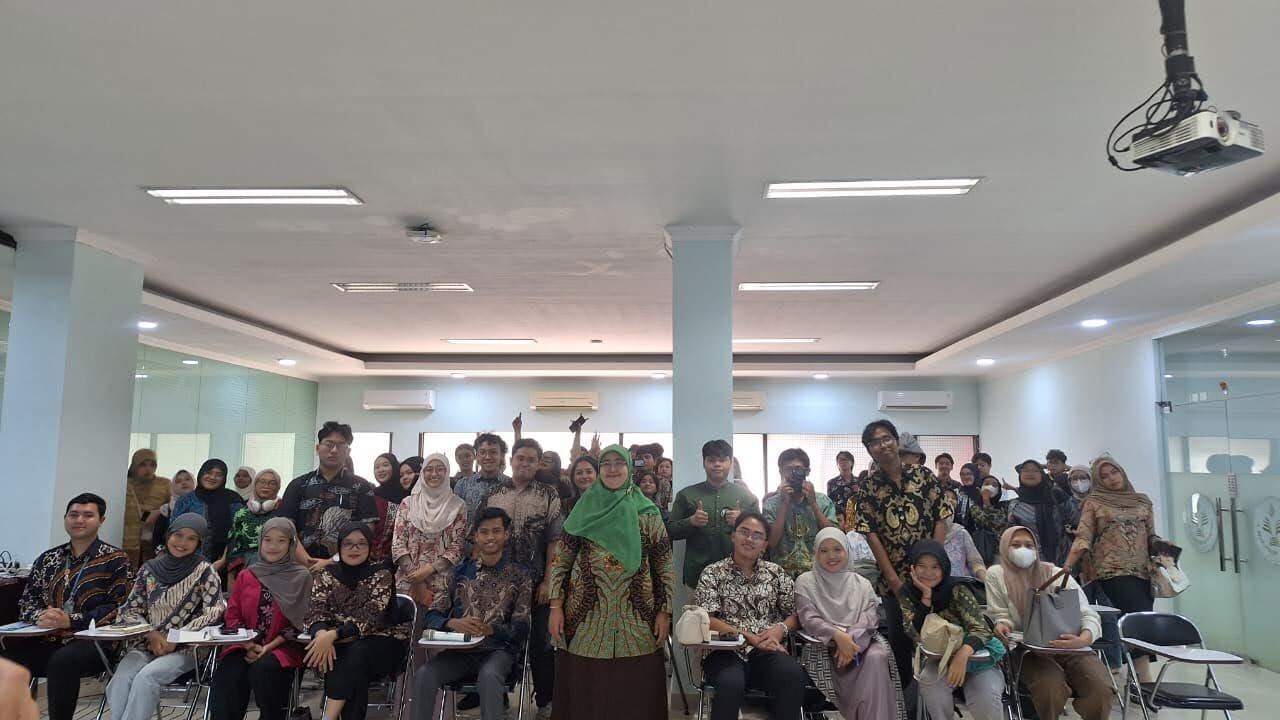
Jakarta, March 12, 2026 — Undergraduate of Communication Science UNJ participated in The Eurasia International Course 2026 – Session 2, themed “Theoretical Framework in Digital Sociology,” held on March 9, 2026, in Jakarta. The session featured Dr. Rusfadia Saktiyanti Jahja, M.Si., Coordinator of the Sociology Study Program at UNJ, as the keynote speaker, drawing participants from across academic communities to discuss how digital technology reshapes social interaction and contemporary society..
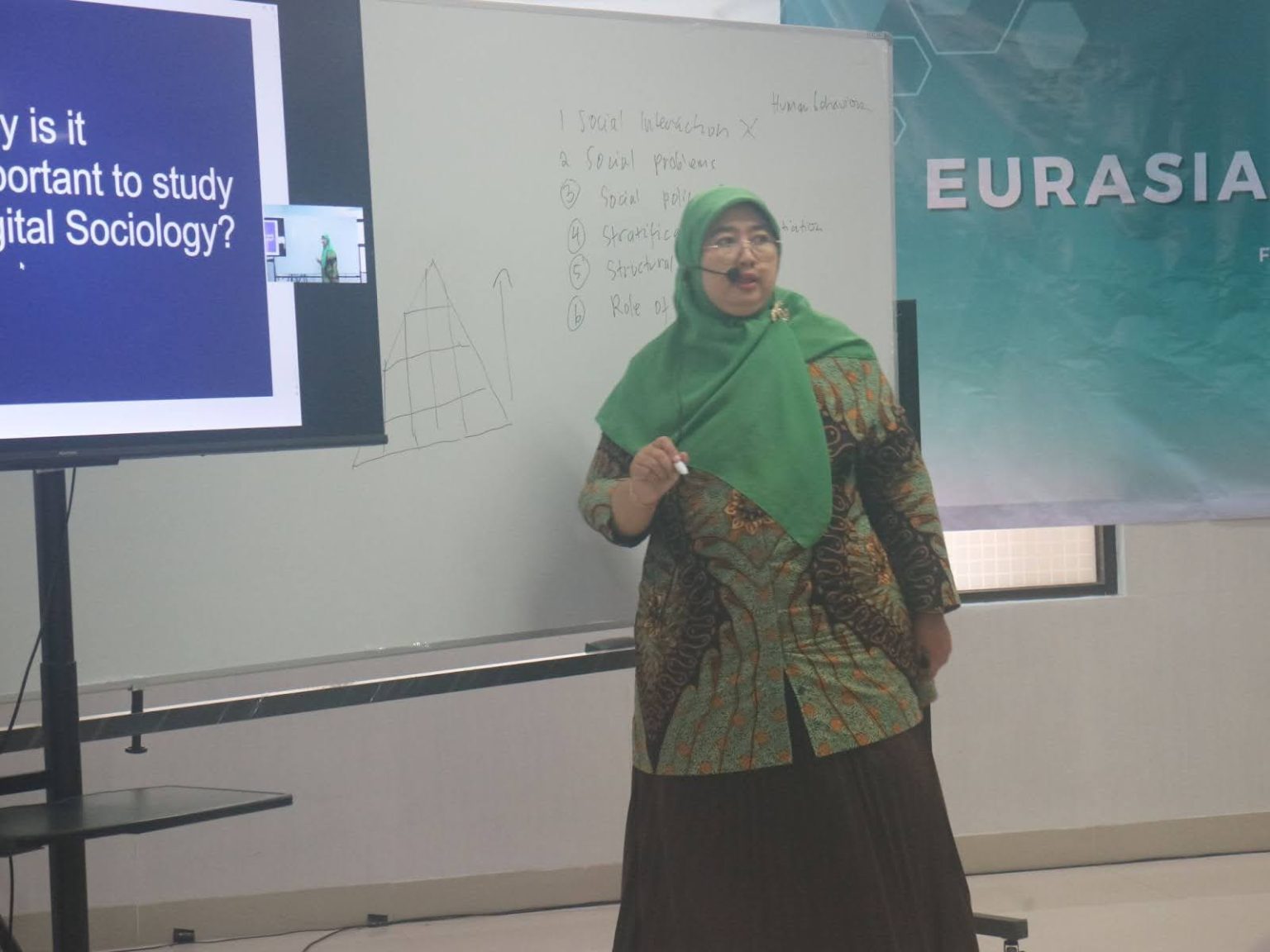
Dr. Rusfadia emphasized that digital sociology extends beyond studying technology usage it critically examines how technology influences social structures, communication patterns, and individual identity formation in digital spaces. She highlighted four key reasons to study digital sociology: understanding technology’s societal impact, analyzing shifting social interaction patterns, studying emerging digital phenomena such as hoaxes, cyberbullying, and cybercrime, and informing evidence-based public policy. The session also explored structural transformations in the digital age — from remote work and the gig economy to evolving family communication, as well as the growing role of big data analysis in contemporary social research.
The session was moderated by Hana Naf’atun, student from the Undergraduate of Communication Science batch 2023 who facilitated the discussion and ensured a dynamic exchange between the speaker and participants.
The Coordinator of Communication Science UNJ, Dr. Dini Safitri, S.Sos., M.Si., CPR., expressed her appreciation “The Eurasia event has become an annual event for FISH, but in 2026, communication science students will make the largest contribution in terms of participation. Hopefully, this will be a positive thing for MBKM learning activities.”
The Eurasia International Course 2026 Session 2 reflects FISH UNJ’s commitment to advancing social science education in the digital age, fostering cross-cultural academic exchange, and equipping future scholars with the theoretical foundations necessary to navigate an increasingly technology-driven world.